
Craftsman, Colonial, or Modern Farmhouse? Architectural Accent Packages That Define Your Home’s Identity
August 24, 2026 2:21 pmWalking up to your front driveway and seeing a flat, featureless exterior is frustrating. Thousands of homeowners live with homes built during rapid expansion eras where builder-grade vinyl siding was slapped across straight walls with zero decorative trim.
The house functions well, but it completely lacks personality. You might crave a home with distinct architectural character, yet you assume creating one requires spending tens of thousands of dollars on custom masonry or structural remodeling.
That is where a specialized exterior trim package comes into play. By pairing coordinated accent pieces together, you can redefine your house into a recognizable architectural style.
Breaking Free from Boring Curb Appeal
Transforming a plain box facade does not mean tearing down your exterior walls. It means adding dimensional layers that catch the sunlight and create depth.
When a house looks flat, your eyes sweep across it without any architectural detail stopping you. Adding crisp trim lines around windows, structural gables, and entry points gives your eyes natural focal points.
Why Small Accent Details Drive Massive Visual Impact
Consider the difference between a plain drywall opening and a room finished with thick crown moulding and detailed baseboards. The interior structure remains unchanged, but the level of refinement shifts instantly.
Your home’s exterior responds to the exact same principle. A carefully planned combination of window headers, decorative shutters, and utility blocks turns plain siding into a refined facade.
The Craftsman Identity: Warmth, Texture, and Handcrafted Character
The Craftsman style is rooted in early 20th-century artisan movement principles. It celebrates visible structural elements, natural earthy textures, and an inviting, grounded warmth.
If your home has prominent roof gables or a covered front porch, a Craftsman accent package fits the structure naturally.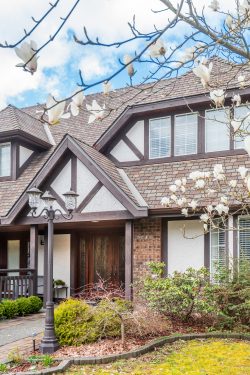
Essential Craftsman Trim Elements
- Gable Knee Braces: Decorative triangular brackets tucked into the peak of your roof gables to mimic timber framing.
- Accent Shakes: Vinyl cedar shakes applied inside gable ends to contrast horizontal wall siding.
- Thick Window Casing: Deep, wide window surrounds that give openings a heavy, handcrafted frame.
- Raised Panel Shutters: Solid panel shutters that bring dimension to upper-story windows.
Best Color Pairings for Craftsman Exteriors
Craftsman trim packages look best when anchored by earthy, nature-inspired palettes. Think sage greens, warm olive tones, rich chestnut browns, and deep charcoal grays.
Using off-white or cream trim instead of bright stark white keeps the contrast soft and natural.
The Colonial Identity: Timeless Symmetry and Formal Elegance
Colonial architecture is defined by order, balance, and historic grace. It is an ideal style for two-story homes with evenly spaced windows and a central front entrance.
If you want your home to look classic, refined, and stately, a Colonial trim layout delivers that presence.
Key Colonial Accent Features
- Window Crossheads & Mantels: Decorative crowns installed directly above window frames, often featuring a center keystone.
- Louvered Shutters: Classic slotted shutters flanking main windows to reinforce vertical symmetry.
- Door Surrounds: Pilasters or decorative side columns that turn your front entry door into a grand entryway.
- Dentil Moulding: Small, tooth-like block patterns running along soffit and fascia lines.
Balancing Proportion for Classic Architecture
Colonial accents require precise scale. Installing shutters that are visibly too narrow for the window frame ruins the illusion of historical authenticity.
Shutters should always measure half the total width of the window frame so they appear as though they could close fully over the glass.
Modern Farmhouse Exterior Trim: Bold Contrast and Clean Lines
The modern farmhouse style continues to dominate residential exterior design because it mixes traditional rural warmth with contemporary minimalism.
Applying a modern farmhouse exterior trim package creates an instant statement using high-contrast color schemes and strong vertical lines.
Signature Elements of the Modern Farmhouse Look
- Board and Batten Accents: Vertical siding panels featuring raised trim strips that draw the eye upward.
- Dark Window Frames: Black or charcoal iron-ore window surrounds set against light wall panels.
- Clean-Line Utility Blocks: Square, unadorned light blocks and mounting plates that hide electrical hookups smoothly.
- Simple Gable Brackets: Minimalist A-frame gable accents without ornate scrolls or complex curves.

Avoiding Over-Styling on Contemporary Facades
Because the modern farmhouse style relies heavily on high contrast, less is more. Adding ornate shutters or detailed crown moulding to a modern farmhouse façade creates visual confusion.
Stick to straight edges, flat trim boards, and sharp geometric angles. For real-world design inspiration on combining vertical siding with modern finishes, review these design ideas for new exterior builds.
The Rule of Three: Avoiding Visual Clutter on Your Exterior
A major hesitation homeowners face when choosing decorative accents is the fear of going overboard. Nobody wants a home that looks like a chaotic catalog of random trim options.
The secret to a polished exterior is strict restraint. By adhering to design rules, your home will look intentional and architecturally designed.
Balancing Textures Across Your Façade
Follow the Rule of Three for exterior textures:
- Primary Texture (60%): Traditional horizontal lap siding or main brickwork.
- Secondary Texture (30%): Vertical board and batten or decorative shake gables.
- Accent Detail (10%): Smooth window mantels, shutters, or gable knee braces.
Mixing more than three primary textures on a single home creates visual friction rather than harmony.
Choosing Cohesive Accent Colors
Keep your color palette equally controlled. Select one primary wall color, one dominant trim color for window frames and fascia, and one accent color reserved exclusively for shutters and the front door. When your light blocks, utility vents, and mounting plates match your main siding color, they blend in smoothly rather than drawing unnecessary attention.
Engineered Vinyl vs. Wood: Built for Canadian Winters
Choosing the right style package is only half the battle. Southwestern Ontario experiences brutal winter freeze-thaw cycles, driving rain off the Great Lakes, and high summer humidity.
Traditional wood trim, shutters, and decorative gable brackets suffer quickly under these harsh environmental swings.
Feature / Trait | Traditional Wood Trim | Molded Poly-Composite |
Moisture Resistance | Absorbs moisture & swells | 100% waterproof & moisture-sealed |
Maintenance & Paint | Paint peels within 3–5 years | Molded-in color never needs repainting |
Freeze-Thaw Performance | Joints split during freeze cycles | Expands and contracts uniformly |
Durability & Pests | Susceptible to rot and insect damage | Impervious to pests, rot, and decay |
Moisture Resistance in Freeze-Thaw Cycles
Wood is porous. During wet autumn months, wood trim absorbs moisture. When winter temperatures drop below freezing, that trapped water expands, cracking paint seals and splitting the wood grain.
Molded poly-composite and vinyl accents are 100% moisture-proof. They resist water absorption completely, ensuring freeze-thaw cycles cause no structural splitting or warping.
Zero-Maintenance Performance Year After Year
Engineered vinyl and composite accent lines—such as Mid-America components—come with color molded directly through the material.
- No scraping chipped paint off high gable peaks.
- No repainting faded window frames every four seasons.
- No wood rot around window corners where moisture accumulates.
- Simple cleaning using a garden hose or mild detergent.
How to Choose and Install Your Accent Package Step-by-Step
Ready to transform your home’s exterior? Follow this straightforward process to select and install your accents with confidence.
- Identify Your Architectural Base: Determine if your home naturally suits Craftsman, Colonial, or Modern Farmhouse lines based on your roof angle and window placement.
- Take Baseline Photos: Photograph your house straight-on from the street during bright daylight to review your facade objectively.
- Select Your Core Accent Package: Choose your primary window mantels, gable brackets, and shutter styles from an integrated system.
- Coordinate Utility Mounting Blocks: Swap outdated or discolored dryer vents, light blocks, and hose bib covers for color-matched, water-tight blocks.
- Schedule Professional Installation: Ensure all accents are mounted using integrated J-channels and proper flashing to protect your home’s moisture barrier.
Ready to see how these decorative pieces look on your home? Visit our London showroom or reach out to our team at McCallum Aluminum to schedule a free, no-pressure estimate today.
FAQs
What is included in a complete exterior trim package?
A complete package typically includes window headers or mantels, decorative shutters, gable end brackets or knee braces, soffit and fascia trim, and color-matched mounting blocks for lights and utility outlets.
Can I install decorative vinyl accents over my existing siding?
Yes. Many accent components like surface-mount shutters and decorative gable brackets can be retrofitted onto existing siding. However, items like window crossheads and integrated mounting blocks are best installed during a siding replacement for seamless waterproofing.
Will dark-colored vinyl trim fade in the sun?
Modern engineered vinyl and poly-composite trim products use advanced UV-inhibiting polymers and heat-reflective pigments. This technology prevents chalking, fading, and heat warping even on dark charcoal or black finishes.
How do I clean and maintain vinyl gable brackets and shutters?
Vinyl and composite accents require minimal upkeep. Rinsing them once or twice a year with a garden hose to remove surface dust is usually sufficient. For stubborn dirt, use a soft cloth with mild soap and warm water.