
Smart Locks vs. Deadbolts: Choosing the Most Secure Hardware for Your New Entry Door
May 14, 2026 2:23 pmChoosing a lock used to be simple. You picked a finish that matched your handle and went home. Today, the walk down the hardware aisle feels like choosing a computer. You see touchscreens, fingerprint scanners, and traditional heavy-duty metal.
When you invest in high security entry doors, the hardware is the final line of defense. If the lock fails, the strongest steel door in the world won’t protect your home. Many homeowners feel torn between the proven reliability of a deadbolt and the modern ease of a smart system.
This guide breaks down the pros and cons through the lens of local Ontario living. We look at how these locks handle our winters and whether the “smart” features are worth the upgrade for your specific lifestyle.
Defining Physical Security vs. Digital Convenience
A common myth is that smart locks are inherently weaker than old-fashioned ones. In reality, the “security” of a lock comes from its internal strike plate and the metal bolt that slides into the door frame.
Whether you use a physical key or a smartphone app, that metal bolt is what stops a burglar. To ensure you have a truly secure setup, look for American National Standards Institute (ANSI) ratings. Grade 1 is the highest level of residential security.
Traditional deadbolts are prized for their mechanical simplicity. There are no circuits to fry or batteries to change. However, smart locks offer “digital convenience” that mechanics can’t touch. This includes remote locking, guest codes, and activity logs.
Addressing the Tech-Skeptic: What if the Power Goes Out?
If you worry about technology failing at the worst moment, you aren’t alone. Many London homeowners ask what happens when a smart lock loses power during a winter storm.
Most modern electronic door locks are designed with these specific fears in mind. They operate on independent battery power, meaning they work even if your house loses electricity or the Wi-Fi goes down.
Quality smart hardware provides multiple warnings weeks before the battery actually dies. Even if you ignore every alert, almost all models include a hidden physical keyhole or a backup battery jump-start port. You won’t be trapped outside in the snow because of a dead AA battery.
The Juggling Act: Solving Daily Friction
Think about your typical Tuesday morning. You are balancing a travel mug, a laptop bag, and perhaps a toddler’s hand. Fumbling for keys in a dark pocket is a genuine daily pain point.
Smart locks solve the “juggling act” through proximity sensors or simple keypads. Some models unlock automatically as your phone approaches the porch. Others allow a quick tap of a code that you can memorize, removing the need for physical keys entirely.
This isn’t just about luxury. It is about reducing the friction of leaving and entering your home. When you don’t have to worry about where your keys are, your transition from the car to the kitchen becomes seamless.
Managing Access Without Spare Keys
One of the biggest security risks for Ontario homes isn’t a lock being picked; it is a spare key being lost. Giving a key to a dog walker, a house cleaner, or a contractor creates a permanent vulnerability. You never truly know if a copy was made.
Electronic systems allow you to create temporary “user codes.” You can set a code for a contractor that only functions between 2 PM and 4 PM on Thursdays. Once the job is done, you delete the code from your phone.
This level of control is impossible with a standard deadbolt. It provides peace of mind because you know exactly who entered your home and at what time. You can view these logs right on your smartphone, giving you a transparent view of your home’s activity.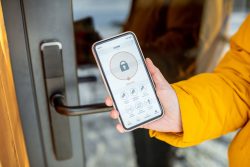
Hardware Performance in Ontario Weather
Southwestern Ontario presents a unique challenge for door hardware. We experience humid summers and bone-chilling winters. Cheap hardware often seizes up when the metal expands and contracts.
When selecting door hardware, you must choose finishes and internal components rated for our climate. This is where professional installation becomes vital.
A lock might work perfectly in a showroom but fail when the door frame shifts slightly due to frost heave. We ensure that the strike plate is perfectly aligned so your smart lock motor doesn’t burn out trying to force a bolt into a misaligned hole.
Aesthetic Choices for Modern Entrances
Security doesn’t have to look industrial. Modern hardware designers have moved away from the bulky, plastic look of early digital locks. You can find sleek, low-profile designs that complement a minimalist aesthetic.
For those who love home design, finding a lock that matches your vision is key. You might find inspiration in various home styling guides, such as Remodelista’s design picks, which often highlight how small hardware details change the feel of a space.
Whether you prefer a classic brass deadbolt or a matte black touchscreen, the hardware should feel like a natural extension of your home’s personality. It should enhance your curb appeal rather than detract from it.
The Cost of Security: Long Term Value
A high-quality deadbolt is an affordable, one-time investment. A smart lock carries a higher upfront price tag and the occasional cost of replacement batteries. However, the “value” isn’t just the price of the metal.
Value comes from the time saved and the anxiety removed. If you’ve ever driven halfway to work and wondered, “Did I lock the front door?”, a smart lock pays for itself in one minute. You simply check the app, see the status, and lock it remotely.
If you prefer a “set it and forget it” lifestyle, the traditional deadbolt remains the champion of reliability. It offers a tactile sense of security that many people still find comforting.
Maintenance Tips for Longevity
Regardless of which style you choose, all locks require basic care. You should lubricate your traditional deadbolt once a year with a graphite-based spray. Avoid oil-based lubricants as they can attract grit and gunk up the tumblers.
For electronic versions, check the battery terminals for any sign of corrosion every six months. If your door begins to stick or requires you to “pull” the handle to get the lock to turn, call a professional.
Forcing a lock against a shifting door frame is the fastest way to break the internal mechanism. A quick adjustment to the hinges or the strike plate can save you the cost of a full lock replacement.
Final Comparison: Which is Right for You?
The best choice depends on your relationship with technology and your daily routine.
Choose a Smart Lock if:
- You frequently have guests or service workers entering your home.
- You often have your hands full and need keyless entry.
- You want the ability to check your door status from anywhere.
Choose a Traditional Deadbolt if:
- You want the most reliable, battery-free operation possible.
- You prefer the simplicity of a physical key.
- You want a lower upfront cost without sacrificing physical strength.
Take the Next Step
Your front door is the handshake of your home. It should be welcoming to guests but an impenetrable wall to anyone else. If you are ready to upgrade to high security entry doors, the team at McCallum Aluminum is here to help.
We don’t just sell doors; we provide the peace of mind that comes with professional installation and expert hardware selection. We can walk you through the latest North Star and Gentek systems to find a fit for your London home.
Contact us today for a quote or visit our showroom to feel the difference between our hardware options in person.
FAQs
Are smart locks easy to hack? While no device is 100% unhackable, reputable brands use advanced encryption similar to what banks use. It is much more common for a thief to break a window or kick in a door than to digitally hack a lock.
Do smart locks work in the cold? Yes, but you must choose models rated for Canadian temperatures. We recommend using lithium batteries in the winter as they perform better in sub-zero temperatures than standard alkaline batteries.
Can I install a smart lock on my existing door? In most cases, yes. As long as your door uses a standard deadbolt preparation, a smart lock can be retrofitted. However, if the door is warped or misaligned, the smart lock may struggle to function.
What is an ANSI Grade 1 rating? This is the highest level of security tested by the American National Standards Institute. It means the lock has been tested to withstand hundreds of thousands of cycles and significant physical force.